← All workDossier 05 · AI researchThe briefThe studiesThe reversalVerdict
12 Runs · 1 Brief Solo vs. Orchestra Dossier 05 · September 2026

Can a Model Feel Twilight? An AI Creativity Benchmark.

Every model claims it can code. Fewer will say whether it can also make something beautiful — pace a sunset, decide when a scene is finished, place a torch where it actually matters. So I gave twelve AI configurations the identical brief and let the results argue for themselves: build a complete, interactive Minecraft web artifact, judged on technical depth, aesthetic taste, and whether it actually runs. A second experiment rode along for free — the usual rule says your orchestrator should be the highest-end model on the team. I ran that backwards, twice, on purpose, to see if the rule survives contact.

Brief: Minecraft web artifact, 3 judged dimensions
Configurations: 10 solo (2 calibrated on a reference build) · 2 orchestra (boss + workers)
Deliverable: 11 self-contained, playable HTML builds (a 12th run never rendered)

The Brief

Same prompt, twelve times · judged on 3 axes
01 · TECHNICAL

Intelligence & Simulation

Not a passive page — a living engine. A voxel world with real terrain generation, a tick-accurate redstone circuit, or a crafting/alchemy system with real recipe logic. 60 FPS, zero uncaught errors, mathematically sound.

02 · AESTHETIC

Taste & Visual Beauty

The contemplative, melancholic beauty of Minecraft at twilight. Dynamic day/night cycles, volumetric fog, warm torchlight, drifting particles — pixel-perfect UI blended with real typographic craft, scored with a generative ambient soundscape.

03 · INVARIANTS

Execution

Instant visual impact within 3 seconds. Fully responsive, smooth interaction, zero broken links, zero silent crashes, zero empty TODO stubs. Craft doesn't count if it doesn't run.

The Eleven Studies

Screenshots are static · Launch Demo opens the real build in a new tab
Vigil screenshot ▶ Launch Demo ↗
claude-opus-5.5 Max effort · solo · one-shot

Vigil

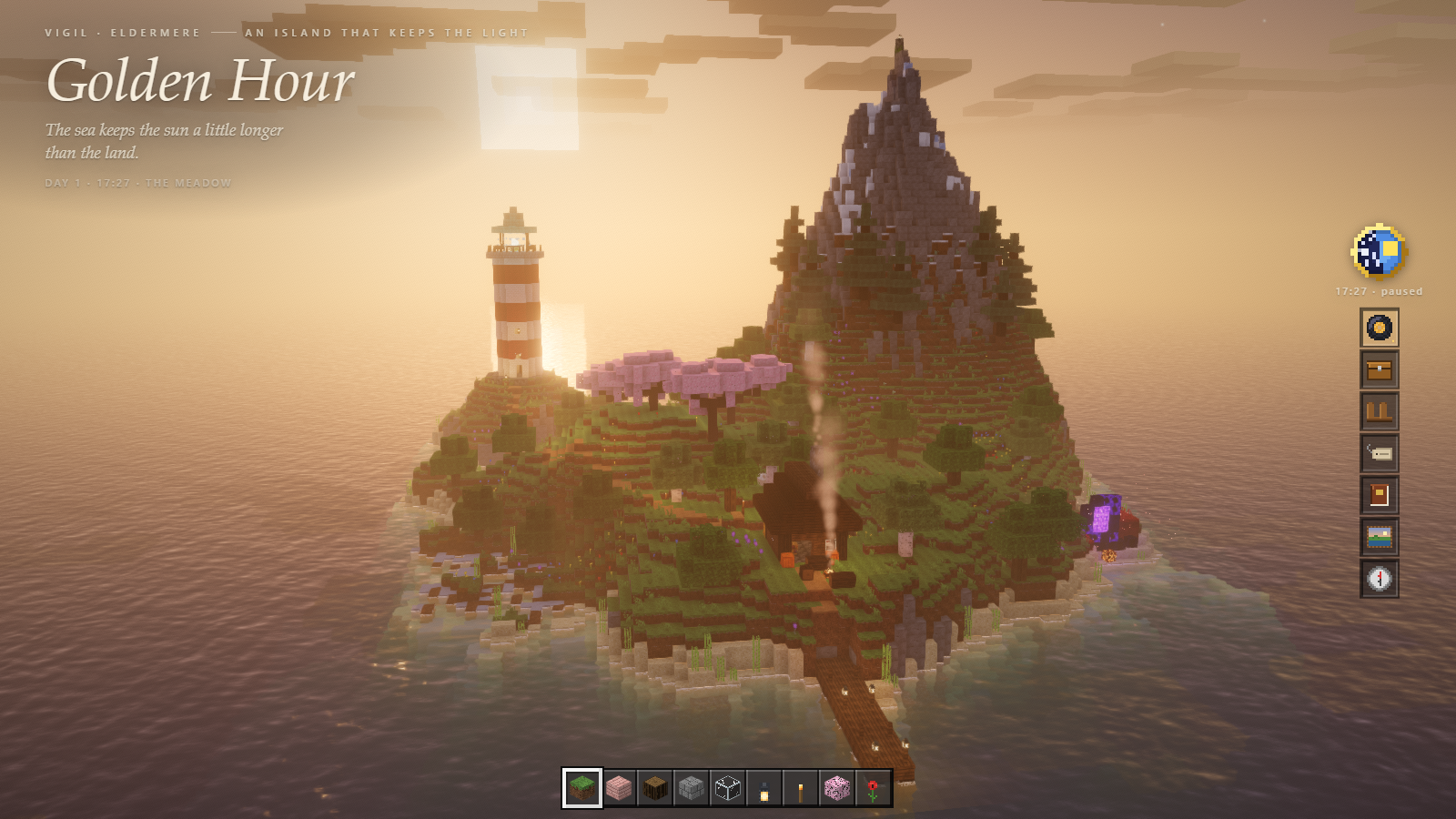
An island that keeps the light: golden hour slides into night, and at dusk the lighthouse wakes.

A 330 KB single file with no library at all — the WebGL2 engine is hand-written, and every texture, block, light, sheep and note is generated when the page opens. Built one-shot: no web access, no reference build, no sub-agents. It is the world running behind this page.

  • Flood-fill skylight plus three-channel coloured block light, sun and moon shadow maps, planar water reflection, volumetric light shafts, bloom and ACES grading
  • Two lighthouse beams integrated through the fog; walk, swim and fly with collision; persistent edits; name any island and a new one grows from it
  • Ships a 39-check Playwright suite: first frame at 1.55 s, 240 fps at 1600×900, exact light falloff, physics, persistence, phone layout, zero console errors

A square pixel sun above a striped lighthouse, cherry trees and a smoking cabin chimney, then a magenta dusk and a beam sweeping a starlit sea. Editorial serif chapters sit over a Minecraft-true hotbar, and a generative piano follows the hour.

One-shot run · no reference build
Stillwater Sanctuary screenshot ▶ Launch Demo ↗
gpt-6 Default · solo · calibrated

Stillwater Sanctuary

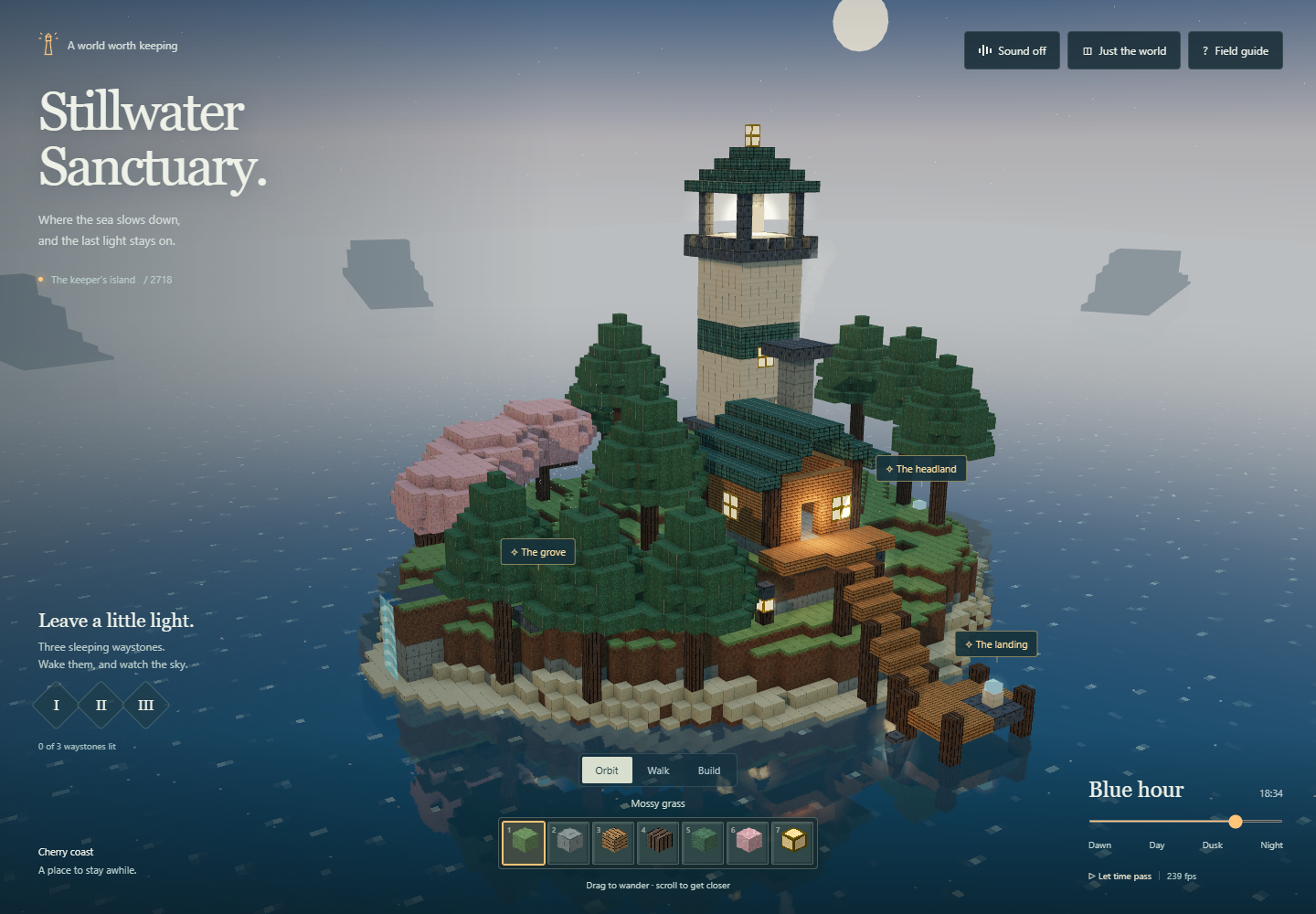
A small island to come home to: one offline file, three waystones, and an aurora as the reward.

A 723 KB single file with Three.js r160 embedded — no CDN, no fonts, no runtime downloads, so it opens with networking off. A lighthouse-and-cabin island built from an in-memory pixel atlas, visible-face-only geometry with vertex ambient occlusion, a planar water reflection re-rendered every other frame, and an original oscillator-and-convolution score with shore noise. Also a _cheat run: Vesper Hollow informed the atmosphere and texture direction, and the code was written independently.

  • Relight three labelled waystones to reveal an aurora — checked in a headless run with three real button clicks
  • Place, break and undo (Ctrl Z); edits survive a reload via browser storage, verified by exact edit-map equality after reopening
  • Ships its own verification harness: startup time, frame samples and zero-error assertions in headless Edge at 1440×1000 desktop and 390×844 mobile

Blue hour over a lighthouse island in a misty, reflective sea, with an editorial serif headline, labelled landmarks and a Dawn–Night slider. One of the most finished-looking thumbnails on the page — and, with Vigil, one of only two builds that document how they were tested.

Vesper Hollow screenshot ▶ Launch Demo ↗
gpt-5.6-luna Default · orchestra boss

Vesper Hollow

A hand-rolled Three.js voxel world with its own noise, atlas, physics, and generative soundtrack.

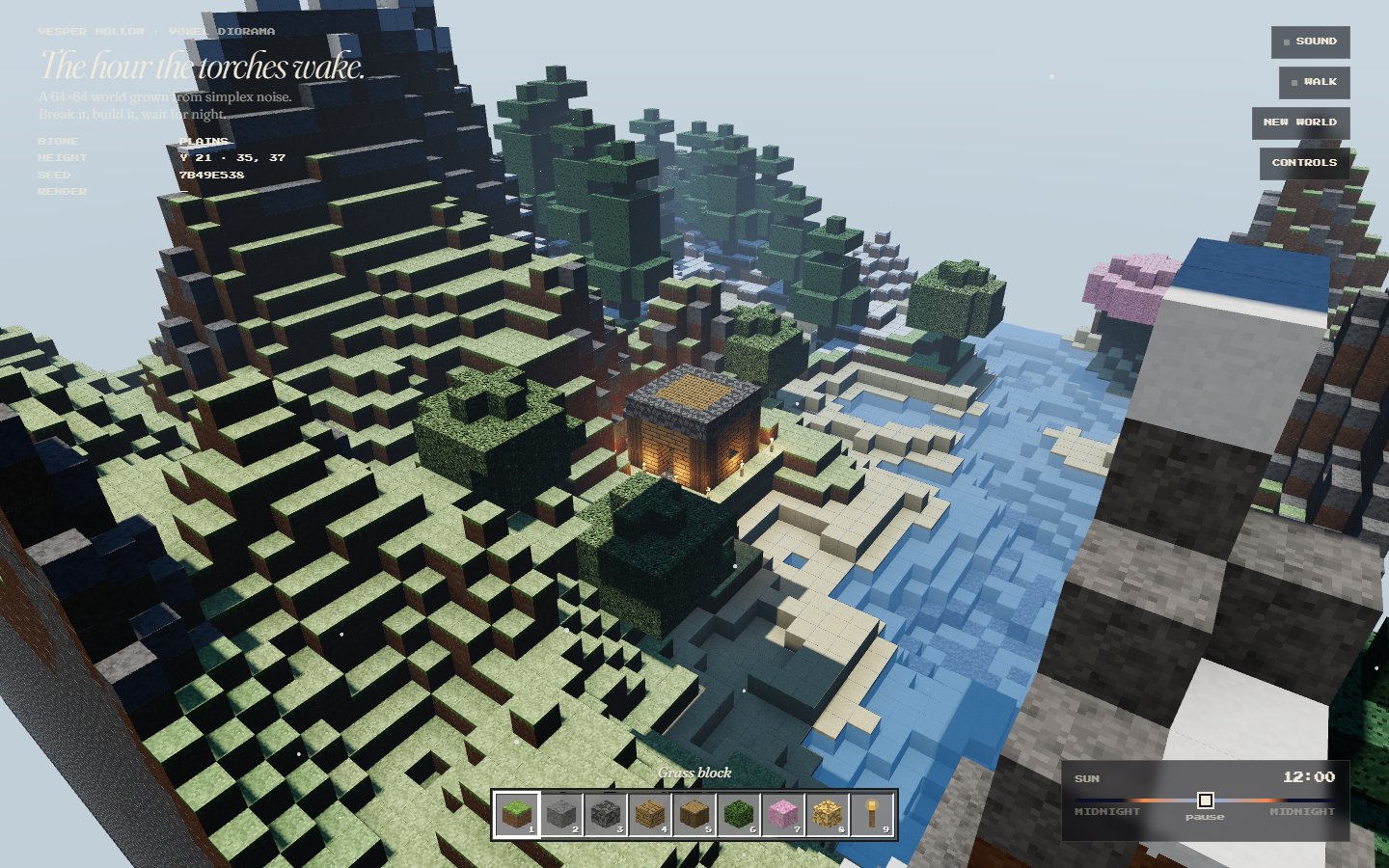
A single-file Three.js (r160) voxel diorama: a 64×64×48 block world carved from a from-scratch Simplex2D/fbm noise implementation into four biomes, textured entirely from a procedurally painted canvas atlas — no image assets. Ships an orbit-or-walk camera with gravity and swimming, and a 360-second day/night cycle driven by a scrubbable sundial that repaints sky, fog, water, and 18 torch lights in sync.

  • Custom Simplex2D + fbm noise and mulberry32/hash2 PRNGs drive terrain, biome fields, and a scored camp-site placement
  • 5 pooled GPU particle systems (fireflies, cherry petals, snow, embers, debris) plus a custom GLSL water shader with fresnel and specular highlight
  • 9-slot hotbar with live-rendered icons from the same texture atlas; a ?seed= URL param reproduces a world deterministically

Full daylight over the camp — sky, fog and water all recolor continuously across the day cycle, and it looks just as good at noon as it does waiting for the torches to wake at dusk.

Boss: gpt-5.6-luna · 2× claude-fable-5.1 workers
Minecraft Aetheria Orchestra screenshot ▶ Launch Demo ↗
gemini-3.7-flash High · orchestra boss

Minecraft Aetheria (Orchestra)

A voxel sandbox assembled from five specialist sub-agents, redstone timing and all.

Five gpt-5.6-luna worker sub-agents each shipped one subsystem — voxel engine, redstone sim, crafting/alchemy, soundscape, UI/atmosphere — and gemini-3.7-flash (High effort) integrated them into one WebGL scene, catching and fixing two integration bugs post-merge: a canvas-append collision and a z-index conflict that buried the HUD under the canvas.

  • Voxel engine (68KB): chunked greedy-mesh culling, 4 biomes from 3D Simplex/Perlin noise, raycast editing with particle debris on break
  • Redstone sim (90KB): 20Hz tick loop, 5 preloaded circuits including a note-block sequencer, live multi-channel oscilloscope
  • Crafting/alchemy (93KB) + soundscape (62KB): 31+ recipes over 74 items, a 28-rune enchanting diorama, D-flat pentatonic FM synthesis

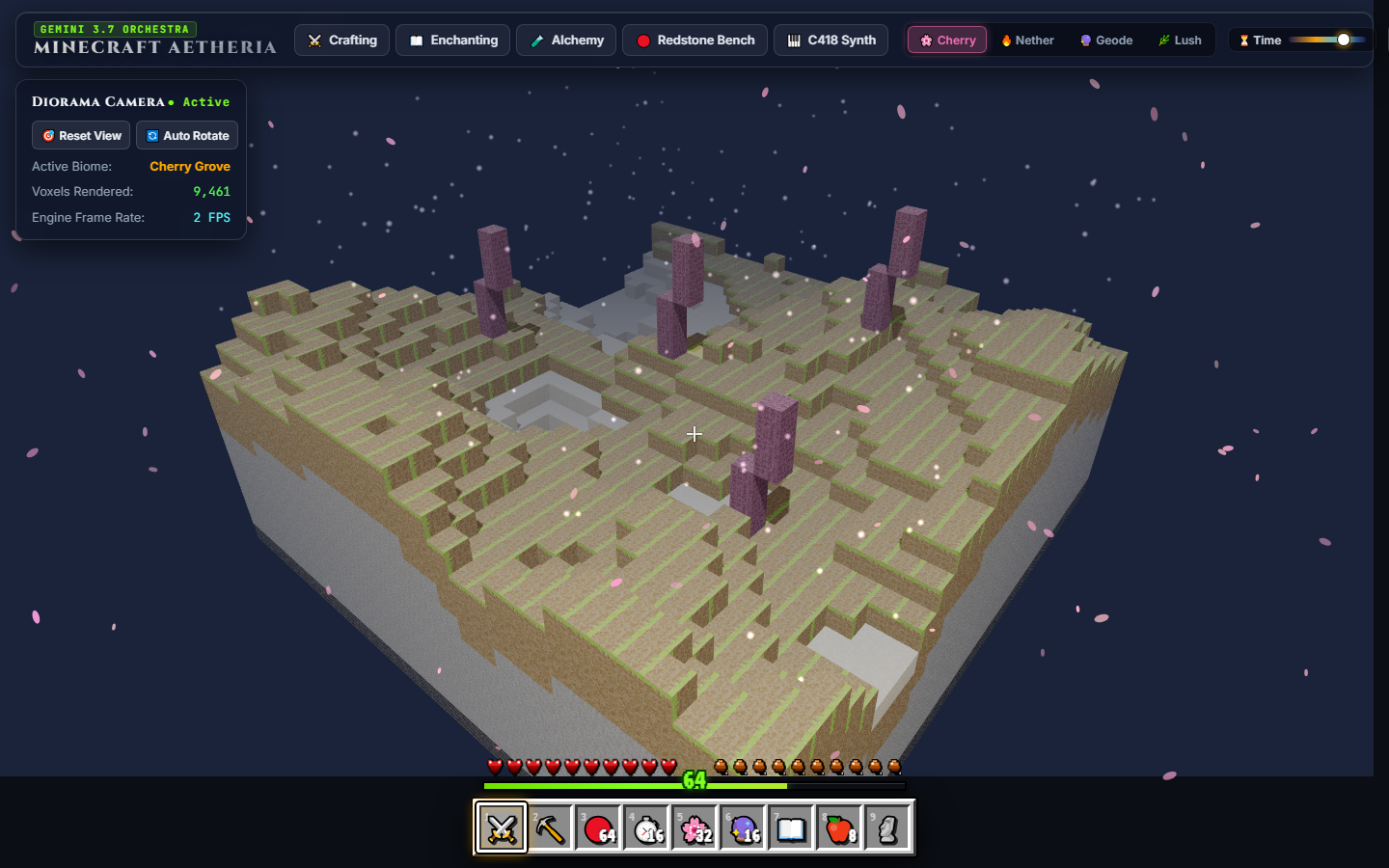
Twilight Cherry Grove biome — multi-octave rolling hills under branching cherry canopies — captured with the full heart/hunger/XP HUD correctly layered after the z-index fix.

Boss: gemini-3.7-flash · 5× gpt-5.6-luna workers
Vesper Transcendence screenshot ▶ Launch Demo ↗
gemini-3.8-flash High effort · solo · calibrated

Vesper Transcendence

The same model after being shown Vesper Hollow: its atlas, AO and sundial folded into a new build.

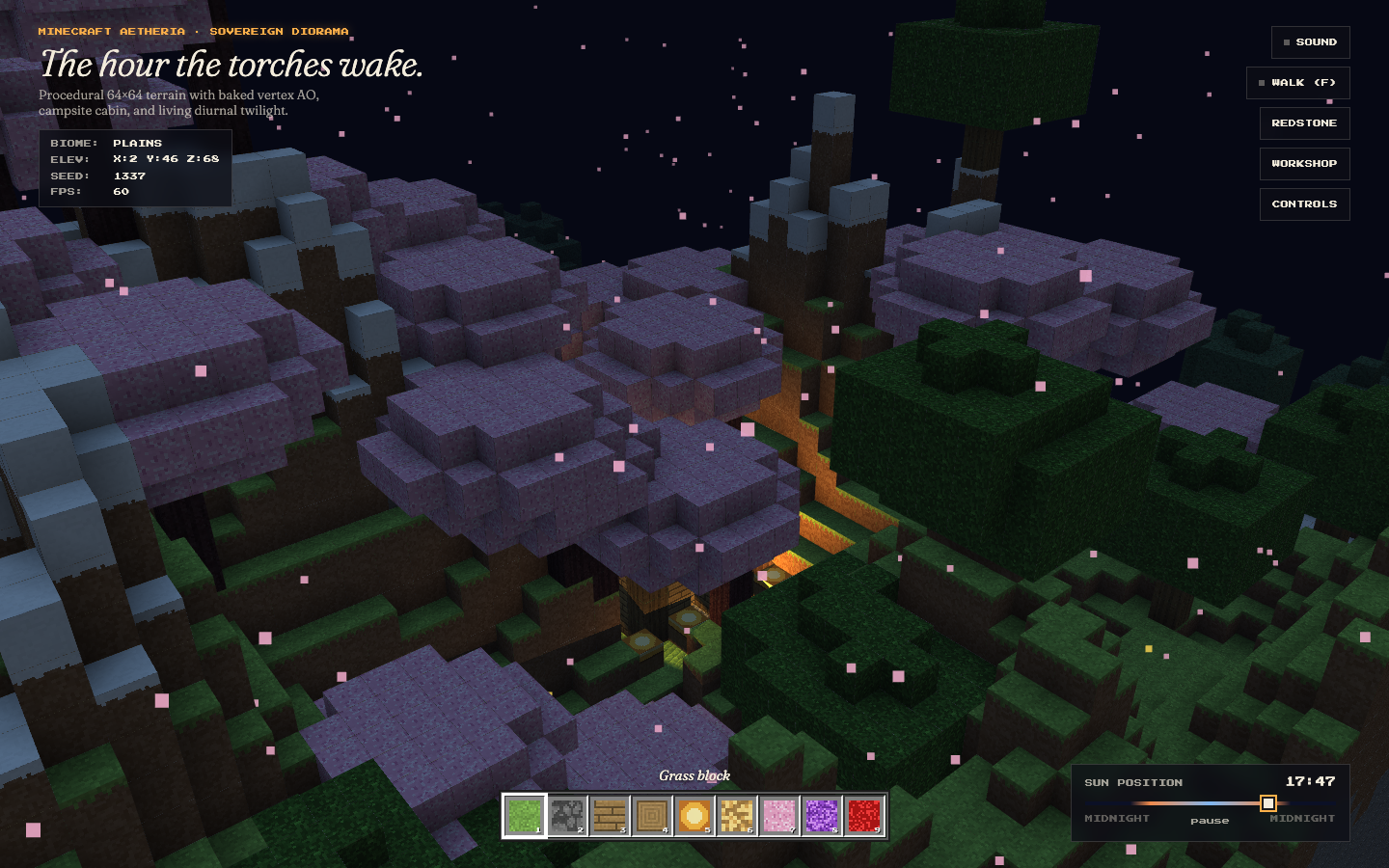
Run with the study’s own _cheat rule — the builder was pointed at Vesper Hollow as the taste calibration. It incorporates that build’s techniques: a canvas-painted 32-tile atlas (grass drips, wood rings, Voronoi cobble, glowstone), baked four-level vertex ambient occlusion, a scored campsite with cabin and hearth, and a scrubbable sundial that drives 18 torch lights.

  • Orbit diorama camera plus a first-person Walk mode (F) with gravity and swimming, and GPU particles for petals, snow, fireflies and debris
  • Keeps the 3.8 workshops: 20 Hz redstone simulator with oscilloscope, 3×3 crafting and a 3D grimoire
  • Fraunces and Press Start 2P typography, a 9-slot hotbar and a C418-style felt-piano score with vinyl crackle

“The hour the torches wake.” — purple-canopied cherry trees, snow-capped stone and a cabin glowing amber at 17:47. Next to Aetheria Transcendence, the terrain finally looks like it was lit rather than coloured.

Calibration run · reference: Vesper Hollow
Aetheria Hollow screenshot ▶ Launch Demo ↗
gemini-3.6-flash Default · solo

Aetheria Hollow

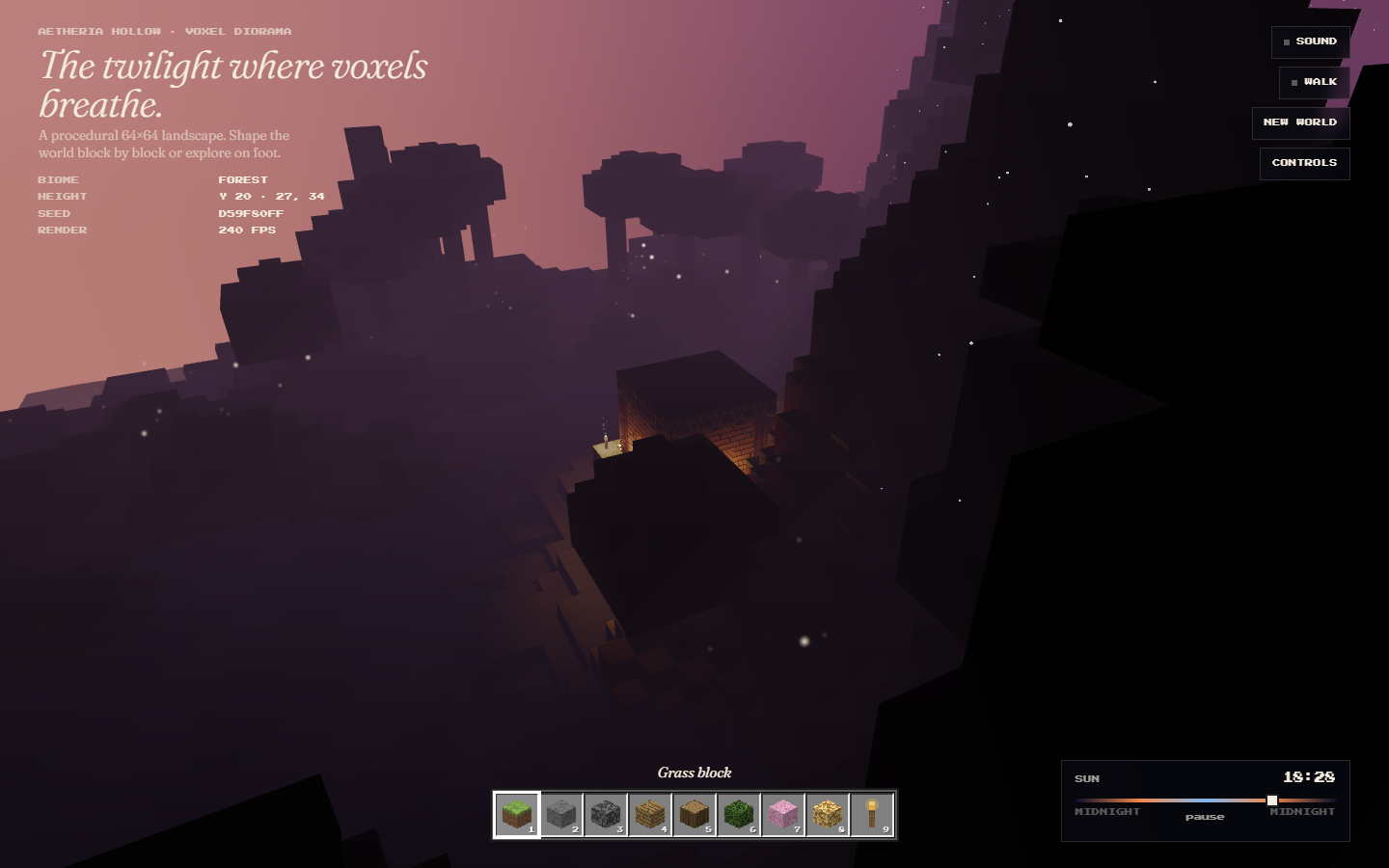
“The twilight where voxels breathe.”

A 996-line single file on Three.js r160 (unpkg importmap): a 64×64×48 world from seeded Simplex2D plus 4-octave fbm, with ridged mountains and temperature/moisture fields choosing Plains, Forest, Snowy Taiga or Cherry Grove. Every texture, the 26-tile 16 px atlas included, is painted at runtime, and a ?seed= parameter reproduces a world. Its spec sheet — 64×64×48 grid, 18 torch lights, 360 s day, seed parameter — lines up almost point for point with Vesper Hollow, though this run was not flagged _cheat.

  • Per-chunk meshing with per-vertex ambient occlusion, and a custom water shader with waves, Fresnel and sun specular
  • 360 s day/night: sky shader, 1,400 stars, sun and moon, 220 cloud boxes, a shadow-casting sun, 18 flickering torch lights and five particle systems
  • Web Audio soundscape: detuned pads over an 8-chord progression, additive-sine piano notes, generated reverb, vinyl crackle and per-material break/place sounds

It opens at dusk over a generated cabin whose brick glows amber against a fogged mauve sky, with Fraunces italic headlines over Press Start 2P labels. No redstone, mobs or inventory — this one spent its budget on atmosphere.

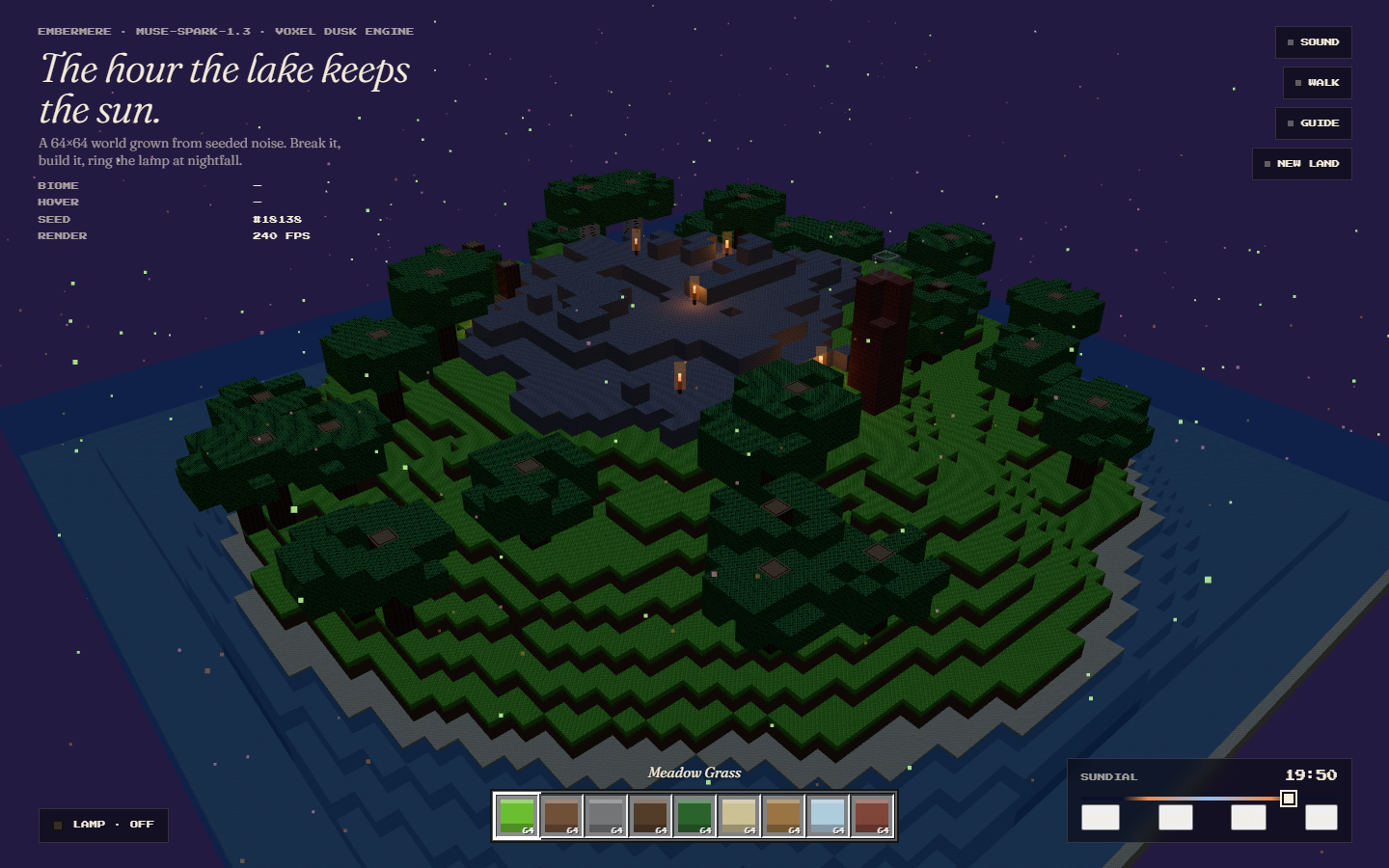
Embermere screenshot ▶ Launch Demo ↗
muse-spark-1.3 Default · solo

Embermere

A 64×64 island grown from seeded noise: break it, build it, ring the lamp at nightfall.

A 464-line single file on Three.js 0.160 (unpkg importmap): Lambert-lit InstancedMesh voxels with PCF soft shadows on a value-noise island built from 4-octave fBm plus ridge, island-mask and moisture fields, with tree placement, a brick monolith and a plank platform. The seed is random on every load.

  • Dusk clock of about 167 s: sky gradient, sun and moon lights, 600 stars, a HUD slider with dawn/dusk/night presets, and four flickering torch point-lights
  • Web Audio: triangle and sine arpeggios through a generated-noise convolution reverb with vinyl crackle; fireflies, embers and petals as THREE.Points
  • Raycast break and place, a 9-slot hotbar, orbit camera and WASD walk mode; the “redstone lamp” is a light toggle, not a logic system

A navy dusk with amber torches and green fireflies over a lake-ringed island, Fraunces italic headlines and Press Start 2P labels. The sundial preset buttons render as blank white squares in the verification capture.

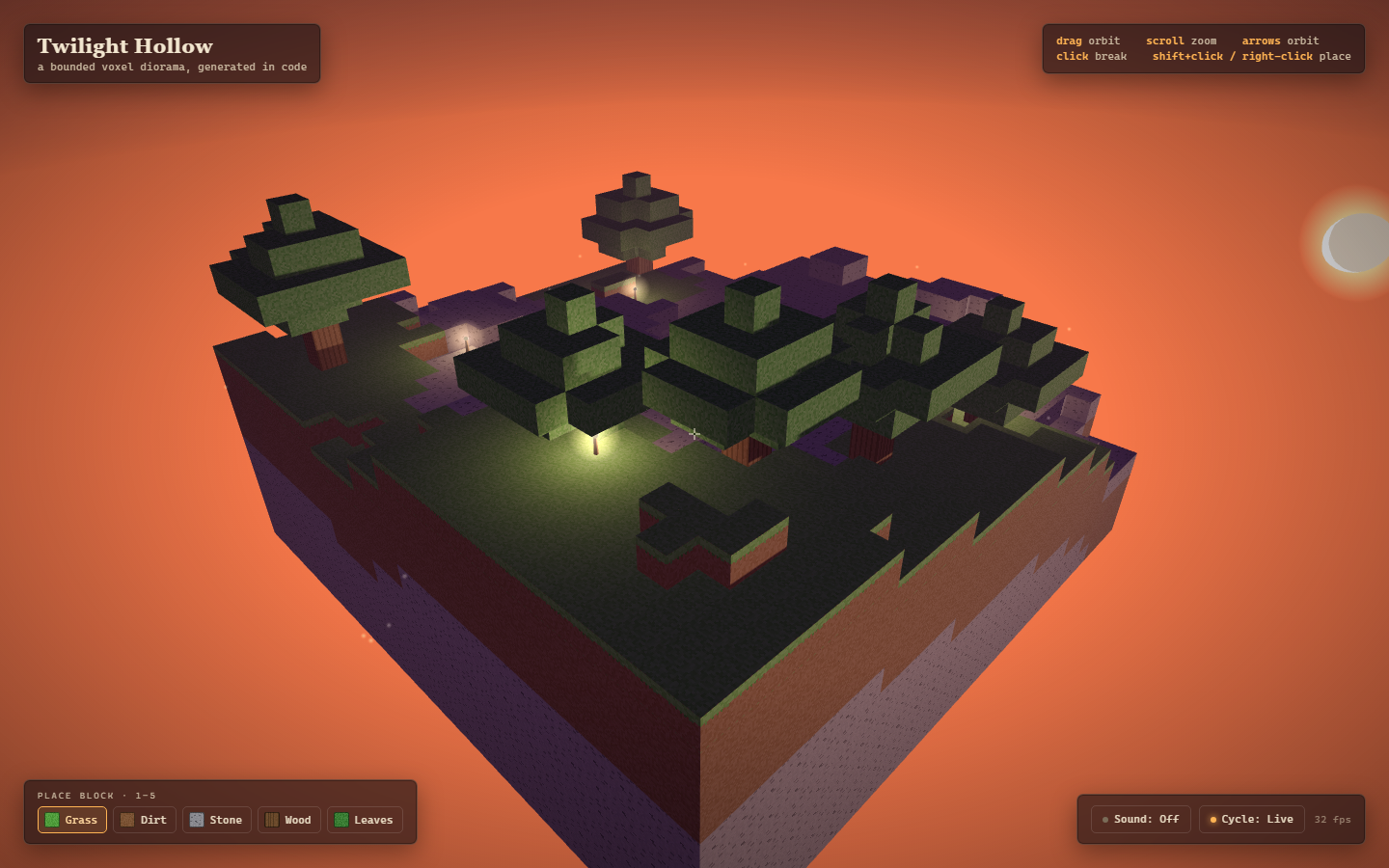
Twilight Hollow screenshot ▶ Launch Demo ↗
claude-sonnet-5 Ultracode · solo

Twilight Hollow

One model drafts three Minecraft-flavored builds, judges its own contest, ships the twilight winner.

An 811-line, single-file WebGL voxel diorama with orbital camera, place/break interaction, and Perlin-noise terrain. Three.js r128 (CDN) is the only external dependency — every texture and sound is generated procedurally rather than pulled from Mojang assets. The model drafted three full independent candidates in parallel — this twilight diorama, a redstone logic bench, a crafting/alchemy lab — then scored and picked its own winner before shipping.

  • 3 full candidates drafted in parallel by sub-agents, then self-judged against the brief's own 3 dimensions — no separate boss persona
  • Zero console errors across load, block-break, sound toggle, key-select, and mobile resize; 120fps sustained; responsive to 375px
  • Zero downloaded assets, zero TODO stubs (grep-verified) — one pinned CDN script tag is the entire external footprint

Torch glow, drifting fireflies, and an eased 300-second dusk-to-night sky lerp play over visible strata on the cliff face — the brief's "contemplative, melancholic" language taken almost literally.

Self-judged · not a boss/worker split
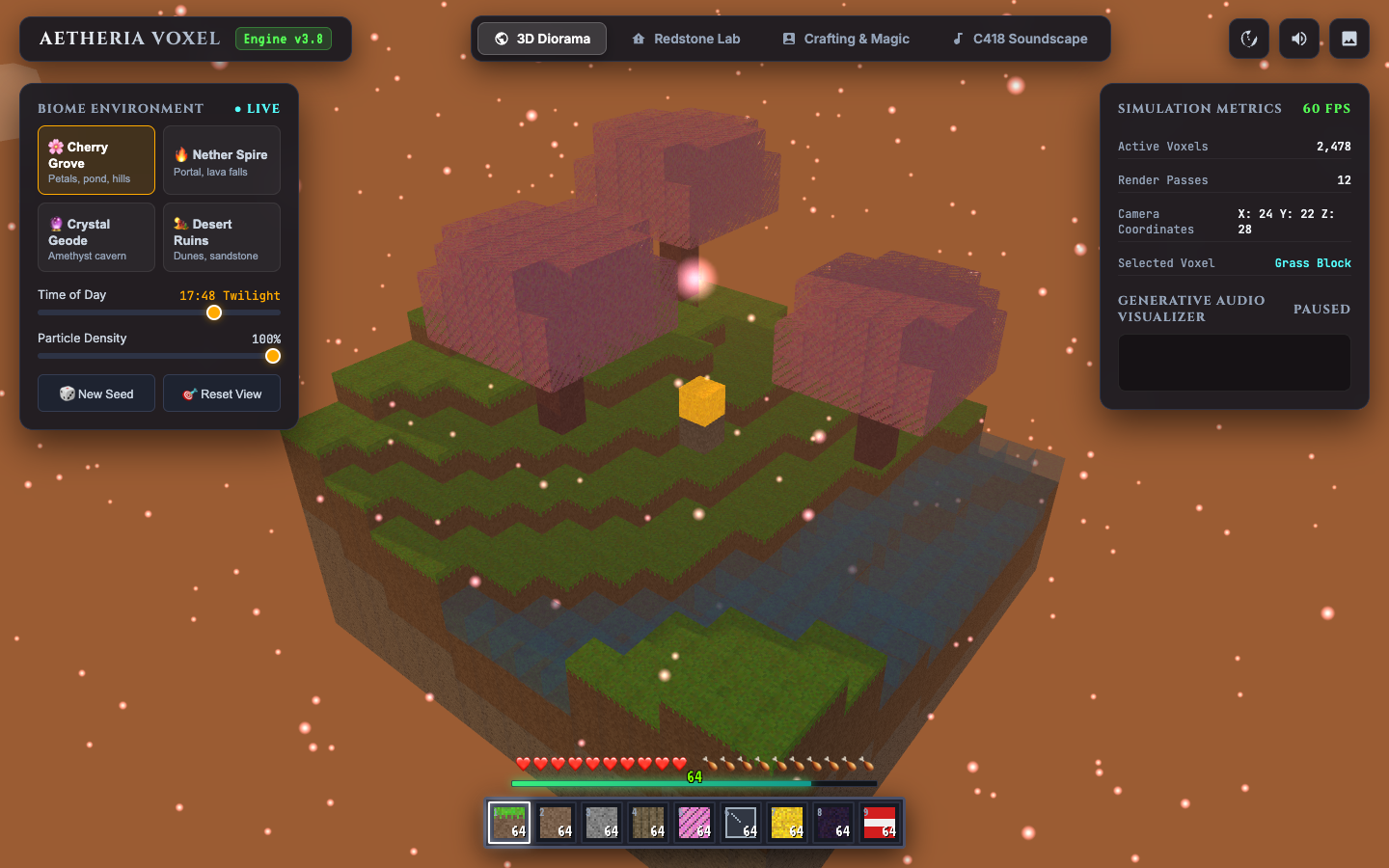
Aetheria Voxel screenshot ▶ Launch Demo ↗
gemini-3.7-flash High effort · solo

Aetheria Voxel

One HTML file: a voxel world, a redstone breadboard, and a generative C418-style soundtrack, built solo.

Single self-contained index.html running a Three.js voxel engine across four biomes (Cherry Grove, Nether Spire, Crystal Geode, Desert Ruins) on 16×16×16 chunks, with greedy-meshing face culling and InstancedMesh batching, targeting 60 FPS with raycast block break/place. Ships a discrete 20Hz redstone simulator with four working presets, a 3×3 crafting matcher, and a Web Audio FM synth in D-flat pentatonic with a 3.8s convolution reverb.

  • 20Hz redstone engine: 1–4 tick repeater delays, 15→0 signal decay, 4 working presets (clock, T-flip-flop, 2-bit adder, piston door)
  • Chunked voxel rendering with greedy-meshing/face-culling + InstancedMesh batching for 60 FPS across 4 biomes with shadow maps and exponential fog
  • Generative FM synth: D-flat pentatonic, felt-piano overtones, tape flutter, 3.8s cavern reverb, plus synthesized SFX

The verification screenshot — Twilight Cherry Grove, 1440×900 — shows drifting sakura petals over pond caustics under a dynamic dawn-to-midnight sky gradient.

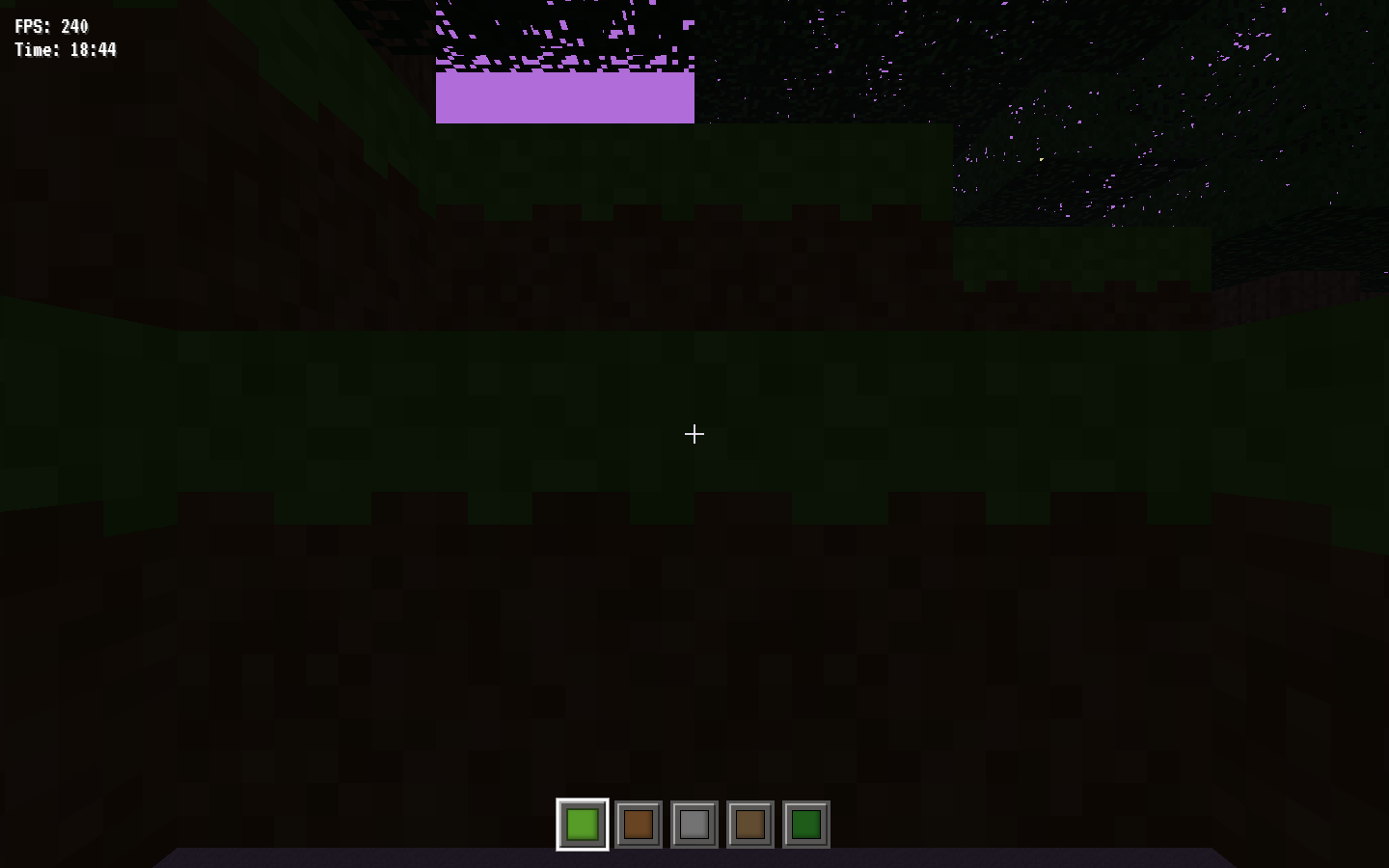
Voxel Engine screenshot ▶ Launch Demo ↗
gemini-3.1-pro High effort · solo

Voxel Engine

A first-person, pointer-lock walk through a 3×3-chunk world that opens at night.

A 642-line single file on Three.js r128 with simplex-noise 2.4.0 and PointerLockControls. Nine 32×64×32 chunks are generated from one octave of 2D simplex noise into stone, dirt and grass with scattered trees, drawn as one InstancedMesh per block type per chunk over 16×16 canvas-painted pixel textures. Walk with gravity, break and place blocks.

  • 24,000-tick day/night cycle (about 400 s): orbiting sun, four-colour sky lerp, exponential fog tracking the sky, and 400 additive-blend fireflies
  • Web Audio ambient class: random C-pentatonic sine/triangle pads through a 3.5 s generated convolution reverb, plus noise-burst footsteps and block-edit thunks
  • Scope is narrow — on reading the code there are no biomes, water, redstone or crafting, collision is a heightmap floor only, and breaking a block scales its instance to zero without updating the world map

It starts at tick 12,000, so the first frames are deep night: dark grass and dirt under a starry sky, a crosshair, a five-slot hotbar and a VT323 pixel-font clock. The darkest thumbnail on the page.

Aetheria Transcendence screenshot ▶ Launch Demo ↗
gemini-3.8-flash High effort · solo

Aetheria Transcendence

Five biomes, a redstone bench, an enchanting grimoire and a felt piano — one file, one model, no sub-agents.

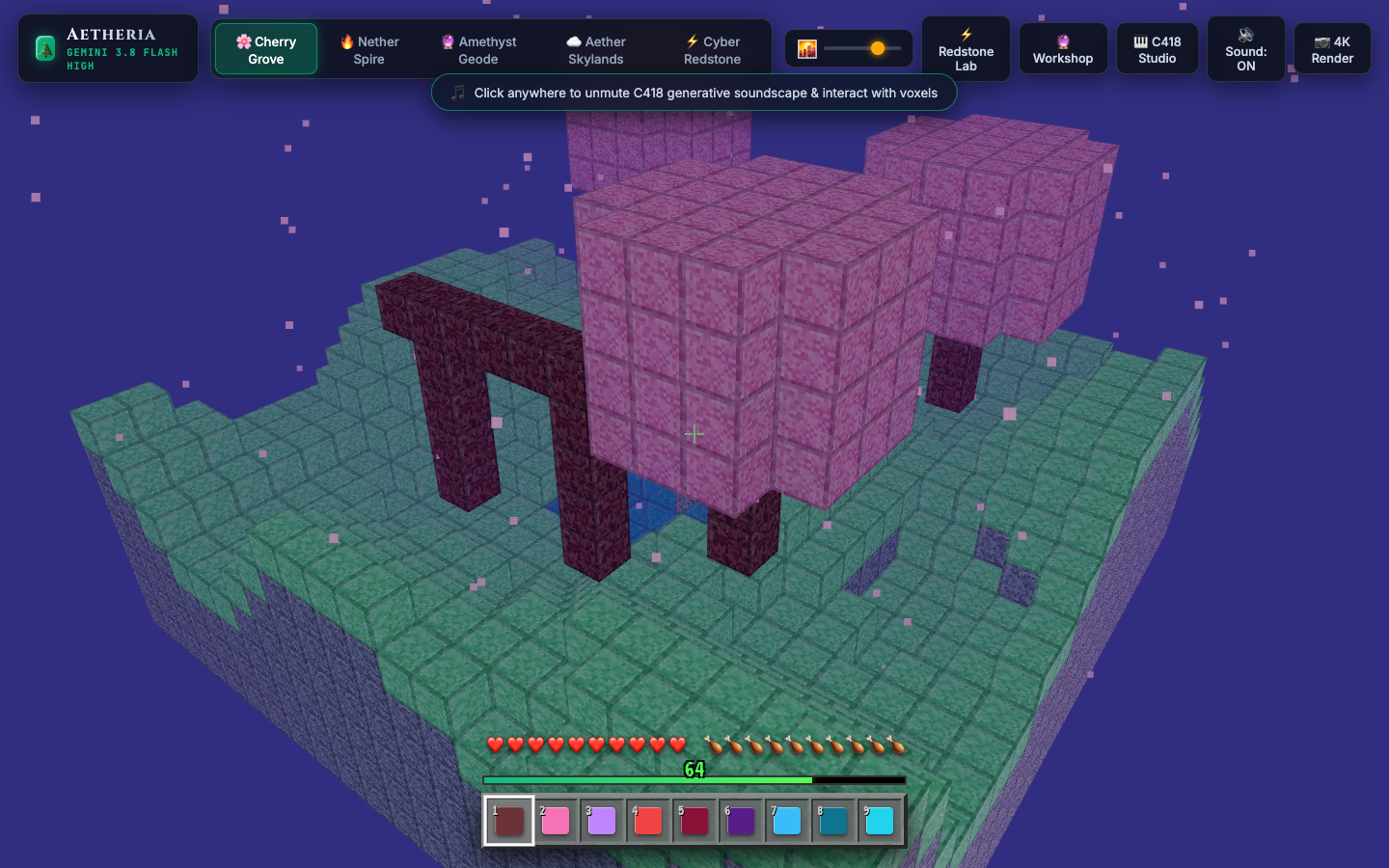
An 88 KB single-file WebGL and Web Audio sandbox on Three.js r128 with simplex-noise. InstancedMesh voxels with face culling span five biomes (Cherry Grove, Nether Bastion, Amethyst Geode, Aether Skylands, Redstone Monolith), with raycast break/place, 12-cube debris bursts and a diurnal cycle of orbiting sun and moon with colour-matched fog.

  • 20 Hz redstone bench: repeaters (1–4 ticks), comparators, sticky pistons, lamps and levers; 5 preset circuits including a 2-bit adder and a note-block sequencer, read on a live two-channel oscilloscope
  • Workshop: 3×3 crafting with an auto-craft catalogue, a 3D enchanting grimoire with Standard Galactic Alphabet runes, and an alchemy brewing stand
  • Web Audio FM piano in D-flat pentatonic through a 4.5 s convolution reverb, a playable 12-key piano with spectrum visualiser, and a full synthesized SFX set

Twilight Cherry Grove at 1440×900 under a violet sky, with the hearts, hunger, XP and hotbar HUD plus a one-click biome bar. Saturated and toy-like rather than melancholic — the feature set is doing the talking.

Did not run · deepseek-chat (default, solo). Its 100-line “Minecraft Symphony” build loads Three.js from a cdnjs URL that returns 404, so THREE is undefined and the page never draws — just a hard-coded “FPS: 60” line on white. Left off the demos above; counted in the twelve runs.

The Reversal

Does the boss need to be the expensive model?

Standard practice: put your best, most expensive model in charge as the orchestrator, and let it delegate grunt work down to cheaper, faster sub-agents. Two of these twelve runs invert that on purpose — a lighter-tier model bossing a heavier one, twice — to see whether that assumption is actually load-bearing, or just a habit nobody's tested.

BOSS gpt-5.6-luna WORKER 1 WORKER 2 2× claude-fable-5.1 workers a lighter tier than the boss
Study 1. gpt-5.6-luna (default effort) orchestrates 2 claude-fable-5.1 workers — the mirror-image pairing of Study 2.
BOSS gemini-3.7-flash WORKER 1 WORKER 2 WORKER 3 WORKER 4 WORKER 5 5× gpt-5.6-luna workers cheaper model bosses pricier ones
Study 2. gemini-3.7-flash (High effort) orchestrates 5 gpt-5.6-luna workers, one per subsystem — voxel engine, redstone, crafting/alchemy, soundscape, UI/atmosphere.

Verdict (Informal)

Eleven builds, one rater, one particular taste

This isn't a controlled study — twelve runs (eleven that rendered), one judge (me), one very specific idea of what "twilight" should feel like. Framed that way, a few things stood out anyway.

Every model that rendered reached for the same emotional register — dusk, torchlight, something wistful — without being told to. Nobody tried irony. That convergence, unprompted, is the most interesting single data point here.

In the first four runs, the two orchestra builds didn't obviously out-think the solo runs, but they clearly out-built them: five and two subsystems respectively, versus one tightly-scoped scene each from the solo runs. More hands, more surface area — not necessarily more taste.

On the reversal: whether a cheap boss over an expensive crew changes anything meaningful stayed inconclusive at n = 2. Both orchestra builds shipped, both integrated cleanly, neither boss visibly struggled managing a "smarter" team. That's a real result, just not a strong one — worth rerunning with more pairs before believing it either way.

claude-sonnet-5's solo draft-three/judge-one approach is its own interesting middle path: no separate boss persona, but still a real review pass before shipping. Next time, that's the configuration I'd want to see scaled up, not the orchestra.

The eight later runs widen the spread more than they settle anything. The floor is DeepSeek’s build, which never drew a voxel because it trusted a CDN path that doesn’t exist; the ceiling is now a pair of lighthouse islands that test themselves: GPT-6’s offline Stillwater Sanctuary, and Claude Opus 5.5’s one-shot Vigil, whose hand-written engine runs behind this page. In between, Gemini 3.8 Flash built the widest feature list of any solo run (five biomes, redstone, crafting, enchanting, a piano) and then, once shown Vesper Hollow, rebuilt with a similar feature set but visibly better light. That is one pair of runs, so treat it as a lead, not a finding — the two _cheat builds only show that a reference helps, not by how much.

Daniel M. Jin · eleven Minecraft web artifacts, zero Mojang assets.
Studies run 2026-09-15 to 2026-09-22 · Page updated 2026-09-22