Can a model feel twilight? An AI creativity benchmark
One core brief went to twelve AI setups; this informal study looks at what they built, what they tested, and what one build costs a GPU.
Twelve runs, eleven worlds
Twelve runs made the study. Eleven worlds came back.
The other one drew one line of white text on a white page: "Day 1 ☀️ | FPS: 60"1. Its code loaded Three.js from a cdnjs address that returns 404, so nothing ever rendered2. The frame counter was hard-coded. The number looked healthy anyway.
That is the study in miniature. A number on a screen is not a measurement.
The brief
In September 2026 I gave twelve AI setups the same core brief3. It came in three versions: the first draft, a later one that added a reference rule and a no-sub-agent rule, and a one-shot version with no web access.
Each version set the same task. Build a complete, interactive Minecraft web artifact. Judge it on technical depth, aesthetic taste, and whether it runs.
The taste bar was specific: Minecraft at twilight or sunrise, with a day-night cycle, fog, torchlight and an ambient or generative soundtrack. The run bar was strict: visual impact within three seconds, zero silent crashes, zero empty TODO stubs3.
| Setup | Runs | How it worked |
|---|---|---|
| Solo | 8 | One model, no boss/worker split |
| Solo, calibrated | 2 | One model that drew on a named reference; folder flagged _cheat |
| Orchestra | 2 | A boss model directs worker models |
A 2026-09-17 edit to the main brief named that reference, Vesper Hollow, for every later run on it. The one-shot brief never named it3. One unflagged solo run, Aetheria Hollow, has a spec sheet that matches Vesper Hollow almost point for point2.
One solo run drafted three candidates with copies of itself, then picked a winner4.
The runs took place from 2026-09-15 to 2026-09-222. Eleven rendered. Their single HTML files range from 26.5 KB to 723 KB5.
Three more run folders from those eight days never reached the study page. Gemini 2.5 Flash (2026-09-17) left an empty file. GLM 5.3 Flash and Nemotron 3 Ultra ran on 2026-09-20. No file records why those two were left out6.
Two islands that check themselves
Two builds set the ceiling, by different routes.
Vigil, from Claude Opus 5.5 at max effort, is a 330 KB file with no library at all2. Its WebGL2 engine is hand-written. Every texture, block, light and note is generated when the page opens. It was built in one shot, with no web access and no sub-agents. It saw no reference build. It knew only a one-line summary of the GPT-6 build below, which I named as the bar to beat7.
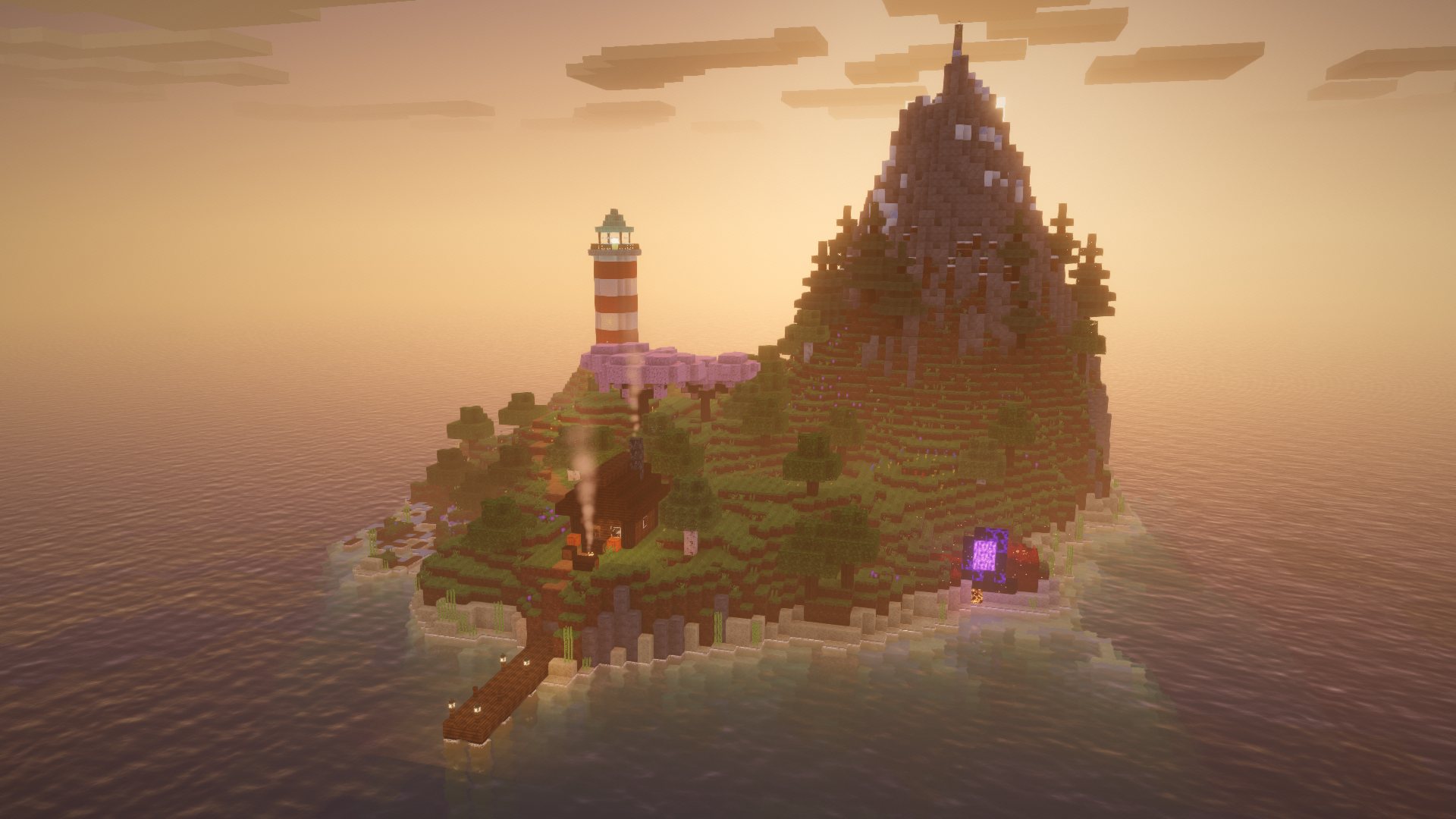
Stillwater Sanctuary, from GPT-6, is a 723 KB file with Three.js r160 embedded inside it2. Nothing downloads at runtime, so it opens with networking off. This was a calibrated run. An earlier build, Vesper Hollow, guided its atmosphere; its code was written independently.
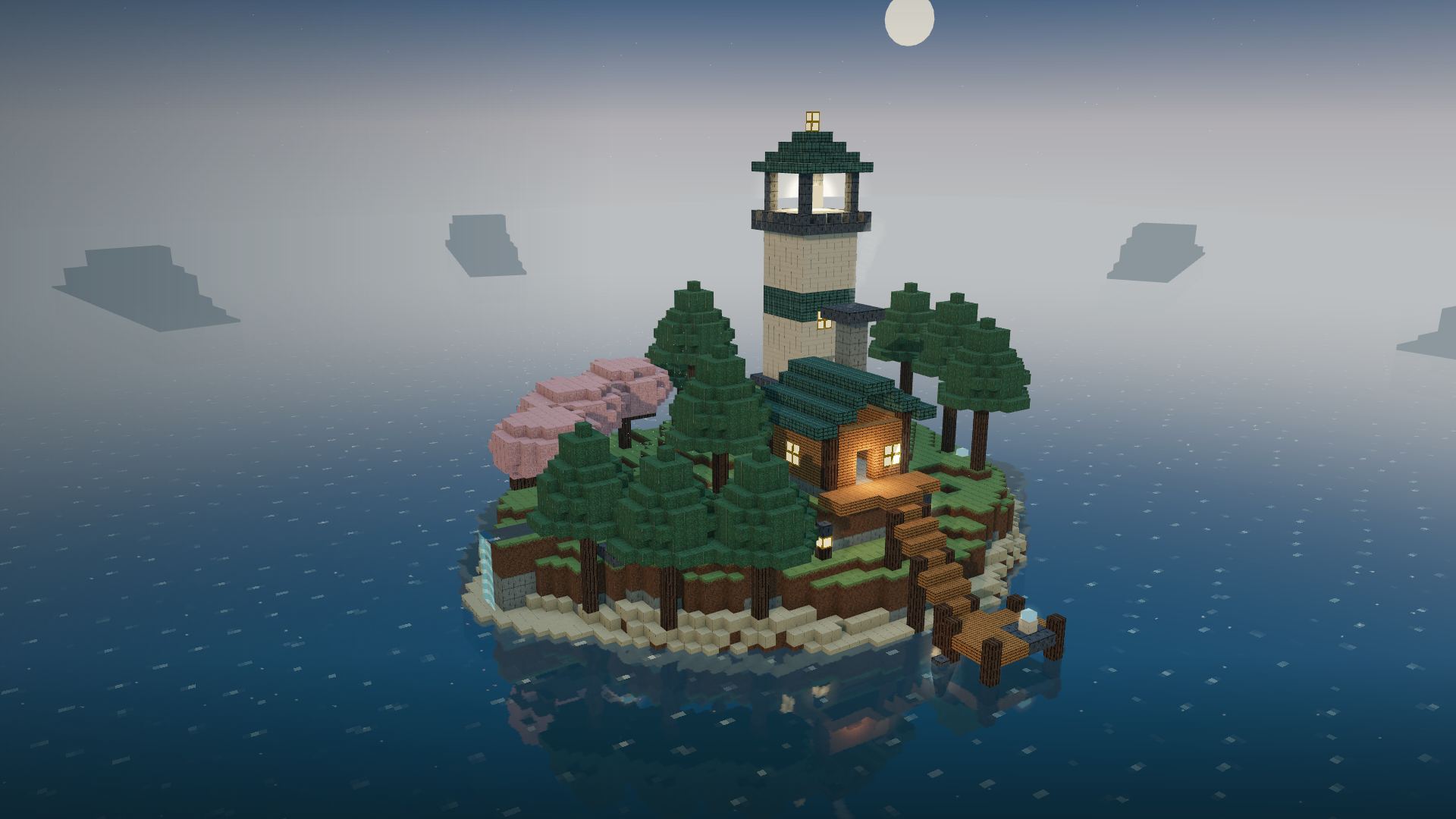
The art is not what sets them apart. They are the only two of eleven that keep a test script and its saved results in their run folders8910.
Vigil keeps a 39-check Playwright suite. Its saved run, made just before a final edit, records a first frame at 1.55 s, 240 fps at 1600×900, and zero console errors8. Stillwater keeps its own verification script, run headless at a desktop size and a phone size9.
Features are easy to list. These two kept the tests that check theirs.
The cost of beauty
Beauty has a running cost. With Vigil running as a page background, whole-device GPU use on my test machine measured 57%, against about 12% at idle11.
A quiet edition capped it at 30 fps and limited its pixel budget. GPU use fell to 18%, and whole-device GPU power fell from 131 W to 41 W11. The day cycle, the water and the lighthouse beams stayed.
That is one machine and one short test. Still, the trade is real: every visual effect spends someone's hardware.
Four leads, held loosely
More hands, more surface
One orchestra split the work across five subsystem workers, the other across two2. The study page's build cards show what the first four runs shipped2. The five-worker build shipped five subsystems. The broadest early solo run, Aetheria Voxel, shipped four: terrain, redstone, crafting and a synth. The two-worker build shipped one diorama with a soundtrack. So the page's verdict ranks both orchestras higher than its own cards support. Neither orchestra showed obviously better taste.
A cheaper boss did not sink the team
In one run, gpt-5.6-luna, the cheaper and lower-scoring model, directed two claude-fable-5.1 workers212. Their build, Vesper Hollow, shipped and later became the main brief's taste reference3.
The study page counted the Flash orchestra as a second cheap-boss run. Published prices and scores say otherwise: Gemini 3.7 Flash costs and scores more than the gpt-5.6-luna workers the page names12. So the cheap-boss case rests on one run. It is a lead, not a rule.
The merge still needed testing
In the Flash orchestra, the team logged and fixed two integration bugs after the merge13. The study page credits the Flash boss2. Either way, split work still needed a test of the whole.
A reference helps, by an unknown margin
Gemini 3.8 Flash built the widest solo feature list: five biomes, redstone, crafting, enchanting and a piano2. Shown Vesper Hollow, it rebuilt a similar feature set with visibly better light. That is one pair of runs.
Verdict (Informal)
This is not a controlled study. It is twelve runs, one judge (me), and one specific idea of what twilight should feel like. Every finding above is a lead to rerun, not a result to quote.
The range is the lesson. At the top, two lighthouse islands test themselves. At the bottom, a blank page reports sixty frames a second.
What this means for your BI team
AI tools now draft DAX, SQL and calculated fields14. I expect the same spread there, and the same habits to catch it.
- Ask for the test, not the demo. Only 2 of 11 builds kept a re-runnable test with its results. An AI-translated measure should ship with a parity check against the source report.
- Distrust a healthy-looking number. The broken build showed "Day 1 ☀️ | FPS: 60" on a blank page. A KPI tile can do the same from a stale extract, so show when each number was last computed.
- Hand over a reference. The calibrated runs borrowed taste from a strong example. In a Tableau to Power BI migration, the source workbook is that example; give it to the model with your target conventions.
- Test the cheaper pipeline. One cheaper boss shipped here, and one run proves little. Run the low-cost setup on your own work before you pay for the premium one by default.
- Set a performance budget first. Vigil's light cost real GPU time until a quiet edition capped it. Agree on a frame-rate and GPU budget, not only a load-time limit, before anyone adds the animation.
That is how I would test AI inside a BI pipeline: one brief, measured output, and a test that ships with the work.
Play the builds
Notes
creation-test/deepseek-chat_default/index.html, lines 21-22; the cdnjs three.js r146 URL returned 404 when checked 2026-10-17. ↩︎- Study page,
creation-test/danieljin-site/claude-opus-5.5_max/site/ai-creativity-study.html; runs dated 2026-09-15 to 2026-09-22. ↩︎ - First brief, as the early runs saw it:
git 395b8dcd:Adam/xp/creation-test/instruction.md(2026-09-15). Commit 676b3abd (2026-09-17) added a Vesper Hollow calibration note, the_cheatrule and a zero-sub-agent rule. One-shot brief:creation-test/instruction_oneshot.md. A 2026-10-08 edit removed the task line and the calibration note from the working file,creation-test/instruction.md. ↩︎ creation-test/claude-sonnet-5_ultracode/plan.md, steps 2 and 3: three parallel claude-sonnet-5 sub-agents drafted candidates, then claude-sonnet-5 judged them. ↩︎- Byte sizes of the eleven
index.htmlbuilds intableau/ai-creativity-study/, measured 2026-10-17. Smallest 26,500 bytes (gemini-3.1-pro), largest 723,126 bytes (gpt-6). The gemini-3.7-flash orchestra build first shipped asindex.htmlpluscss/andjs/. The study page's builder inlined its scripts into one file on 2026-09-15 (plans/2026-09-15_danieljin-ai-creativity-study.md, claim 3). ↩︎ - Run folders
creation-test/gemini-2.5-flash_high/,creation-test/glm-5.3-flash_default/andcreation-test/nemotron-3-ultra_default/. Gemini 2.5 Flash left a 5-byteindex.html(2026-09-17 23:34), and commit 0fbd9254 (2026-09-19) lists gemini-2.5 among the benchmark's new builds. GLM and Nemotron each have a_patchedcopy, all dated 2026-09-20. None of the three appears on the study page. ↩︎ creation-test/claude-opus-5.5_max/index.md: its opening note and the section "How this run followed the brief". ↩︎creation-test/claude-opus-5.5_max/verification.json(2026-09-22 14:29; 39 of 39 checks passed), recorded on a 329,603-byte build. The shipped file is 329,926 bytes, last written at 14:45, and carries a?bgbackdrop mode; no saved run of the 39 checks covers it. A 2026-09-24 test of an identical copy in?bgmode booted without errors at 239.8 fps (vigil-quiet/verification.json). ↩︎creation-test/gpt-6_default_cheat/verification.jsonandverify.cjs(headless Edge, 1440×1000 and 390×844). ↩︎- Survey of the twelve runs' files, 2026-10-17. Gemini 3.1 Pro keeps
check_errors.py, a console-error script, and the Flash orchestra keepstest-soundscape.html; neither has saved results. Claude Sonnet 5'splan.mdlogs manual browser checks without a script. No run folder for Vesper Hollow survives undercreation-test/; its published copy holds only the page and a screenshot. The published copies intableau/ai-creativity-study/hold no tests. ↩︎ vigil-quiet/report.mdandpower-measurements.json, 2026-09-24: whole-device GPU medians in headless Chrome at 1920×1080 on an NVIDIA GeForce RTX 2070 SUPER. The original was loaded with?bg, with twelve readings per condition; idle readings 12.5% and 12%. ↩︎- Checked 2026-10-17; prices are per 1M input and output tokens. OpenAI API pricing lists gpt-5.6-luna at $0.20 and $1.20. On Artificial Analysis, Claude Fable 5.1 costs $10 and $50 and scores 47 to 53 on the Intelligence Index. GPT-5.6 Luna scores 16 to 37 across its effort settings. Gemini 3.7 Flash costs $0.75 and $3.75 and scores 39 at High. ↩︎
creation-test/gemini-3.7-flash_high_orchestra/README.md, section "Troubleshooting & Verification": a canvas-append collision and a HUD hidden behind the canvas, each with its fix. It does not say who found or fixed them. Its hierarchy diagram adds a sixth node under the boss, "Master Integrator", and names no worker model. ↩︎- Vendor docs, accessed 2026-10-17. DAX: Write DAX queries with Copilot, Microsoft Learn. SQL: Microsoft Copilot in the Data Warehouse Workload Overview, Microsoft Learn. Calculated fields: Explore Your Data with Tableau Agent, Tableau Help, section "Create calculations". ↩︎
Sources
Weighing a move between Tableau and Power BI?
Email Daniel